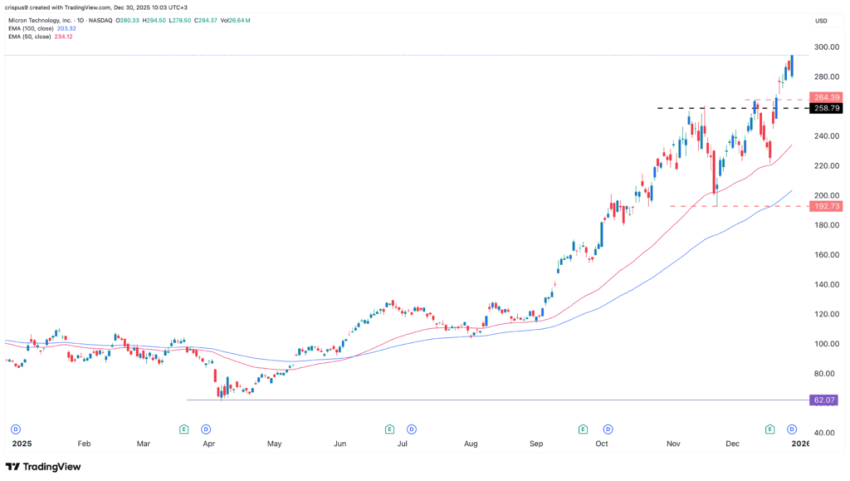
Micron stock has become a focal point for investors as it closed up 3.4% following an increase in DRAM prices across the market. The recent uptick in the MU stock price reflects a broader trend in the semiconductor industry, where shifts in memory product pricing significantly impact company earnings. This rise is particularly noteworthy as demand continues to surge, largely driven by the AI infrastructure boom that necessitates advanced memory solutions. As Micron Technology prepares to distribute its next quarterly dividend, shareholders are keenly interested in how ongoing supply tightness will influence future profitability. The correlation between DRAM pricing and Micron’s performance emphasizes why this stock is essential for prospective investors looking at the technology sector’s dynamics today.
When discussing Micron stock, one can’t overlook the implications of rising DRAM prices on Micron Technology’s overall market performance. This leading manufacturer of memory and storage solutions is adapting to shifts in demand, notably within the AI ecosystem that necessitates advanced memory technologies. Investors are particularly focused on the fluctuations in MU’s stock price as it is intricately linked with the dynamics of semiconductor supply and demand. Moreover, the upcoming quarterly dividend serves as a pivotal moment for shareholders, providing a tangible return that reflects the company’s fiscal health. Understanding these elements is crucial for anyone considering the potential of Micron Technology amidst evolving market conditions.
Micron Stock Performance Amid Rising DRAM Prices
Micron stock has seen significant movement recently, particularly with a 3.4% increase on December 29, 2025, following the announcement of rising DRAM spot prices. The company’s strong performance includes a close at $294.40 per share, which is a clear indicator of investor confidence amid fluctuating semiconductor prices. With DRAM products, especially DDR4 and DDR5, registering price increases, Micron’s stock is poised to benefit as these trends often translate directly to improved earnings. This volatility in stock price reflects market sentiment and highlights the importance of keeping an eye on product pricing.
As the market for memory chips continues to heat up, driven largely by AI infrastructure demands, Micron stock is becoming increasingly correlated with DRAM pricing trends. With the ongoing shortage in the market, the upward trajectory of prices for DDR5 and DDR4 chips could continue to bolster Micron’s earnings, making the stock an attractive option for investors. Given that any price adjustments can quickly affect the bottom line, stakeholders are keenly watching market movements that could impact the landscape of memory product pricing.
AI Infrastructure and Demand for Micron Technology
The demand for advanced semiconductor products like those produced by Micron Technology is closely tied to the growing AI infrastructure. As companies invest heavily in AI capabilities, there is an increasing need for high-bandwidth memory (HBM) solutions. Micron, as a leader in memory manufacturing, is uniquely positioned to capitalize on this surge in demand. As analytical forecasts suggest that AI-driven applications will require more robust memory solutions, Micron’s focus on producing high-margin HBM could yield substantial returns for the company.
Moreover, Micron Technology’s ability to navigate this changing market indicates how well it can adapt to the demands of AI infrastructure. With projected capital spending increasing to $20 billion in 2026, investors are optimistic about Micron’s growth trajectory in a sector that is rapidly evolving. The market is already treating HBM availability and pricing as crucial indicators of how demand in the AI sector is expanding, thus further affirming the integral role that Micron plays in the semiconductor supplies vital for AI advancements.
Understanding Micron’s Quarterly Dividend Strategy
Micron Technology recently declared a quarterly dividend of $0.115 per share, which is payable on January 14, 2026. This dividend announcement is strategically timed, as it aligns with year-end evaluations for shareholders, presenting an opportunity for Micron to reaffirm its financial stability even amid fluctuating market conditions. For investors, this signals that the company not only generates enough revenue from its operations but also prioritizes returning capital to its shareholders.
The quarterly dividend also serves as an important financial indicator, especially in light of rising DRAM prices that could positively impact earnings in the coming quarters. As Micron continues to evolve its business model in response to the AI-driven market, the commitment to dividends indicates confidence in long-term profitability and sustainability. Investors are likely to view this as a positive sign, reinforcing their trust in Micron Technology’s management and financial strategies.
The Impact of DRAM Pricing on MU Stock Price
The recent increase in DRAM prices has a direct impact on MU stock price, making it an essential focal point for investors and market observers. The relationship between DRAM prices and Micron’s stock is clear: as prices rise, so too does the expectation for enhanced revenue forecasts. The latest reports show price increases for critical products like DDR4 and DDR5, reinforcing the notion that Micron’s stock may continue to be buoyed by improving market fundamentals.
Therefore, fluctuations in DRAM pricing are critical data points that shareholders are monitoring closely. As the semiconductor market shifts, any signs of sustained high pricing could lead to a bullish outlook for MU stock. The correlation between memory prices and stock performance exemplifies how closely Micron’s financial results are tied to the dynamics of the semiconductor industry, making DRAM price tracking an important aspect for potential and current investors.
Navigating Semiconductor Market Volatility
Navigating the inherent volatility in the semiconductor market is a defining challenge for companies like Micron Technology. With DRAM prices fluctuating due to supply constraints, particularly driven by AI infrastructure demand, Micron must balance its supply capabilities with market requirements. Understanding this delicate equilibrium is critical for Micron as it seeks to maintain profitability in a cyclical industry where excess supply can lead to sharp drops in price and margins.
In recent times, concerns over a DRAM shortage have affected the market sentiment surrounding Micron. Investors are keenly observing how shifts in consumer electronics and AI development will influence the supply chain and, ultimately, the availability of DRAM products. Consequently, Micron’s ability to forecast and respond to these changes will be crucial in determining its future stock performance and revenue stability in the context of broader market fluctuations.
Future Projections for Micron Technology’s Earnings
Future projections for Micron Technology’s earnings are closely linked to the firm’s ability to leverage rising DRAM prices. Analysts anticipate that increased demand for high-bandwidth memory, primarily driven by the AI sector, will contribute significantly to the company’s bottom line. By forecasting an adjusted profit of $8.42 a share, Micron positions itself for success in a challenging market, suggesting confidence in the sustainability of DRAM price increases and their impact on earnings growth.
As a leader in memory solutions, Micron must carefully manage its production capacity while simultaneously avoiding oversaturation in the market. The successful navigation of this complex landscape will determine how effectively the company can capitalize on favorable market conditions to fuel earnings growth. For investors, understanding Micron’s strategic approach to production and pricing is crucial in assessing the potential risks and rewards associated with investing in MU stock.
Tight Supply Dynamics and Their Implications
The tight supply dynamics in the semiconductor market present both challenges and opportunities for Micron Technology. With a reported shortage in DRAM products, the company is uniquely positioned to benefit from higher pricing and increased demand, especially from sectors related to artificial intelligence. The current shortage not only encourages higher spot prices but also boosts the urgency for companies to secure contracts with memory providers, placing Micron in a favorable bargaining position.
As Micron responds to this tight supply environment, investors will be watching closely how long these favorable conditions can be sustained. The recent increases in DRAM prices imply that Micron may see a continuation of strong revenue flows, as long as demand remains high. Understanding the implications of supply dynamics becomes critical for stakeholders, as they can significantly affect pricing, contract negotiations, and ultimately, the financial health of the company.
Investor Sentiment and Market Reactions to Micron’s Performance
Investor sentiment plays a critical role in the broader market reactions to Micron’s performance. Following the recent spike in both stock prices and dividend declaration, many investors are buoyed by the company’s ability to navigate the volatile semiconductor landscape successfully. As Micron continues to demonstrate resilience amid challenging market conditions, this positive sentiment is likely to attract more institutional support and enhance the overall demand for MU stock.
Market reactions are often influenced by external economic factors, including macroeconomic conditions and competing firms. Hence, loud warning signals from industry analysts about overextended pricing models or erratic supply could dampen the current buoyancy surrounding Micron. Nonetheless, if Micron can maintain its upward trajectory in both pricing and production, it will likely consolidate its position in the semiconductor sector, thus sustaining strong investor confidence.
The Role of Micron Technology in the Global Semiconductor Landscape
Micron Technology plays a pivotal role in the global semiconductor landscape, particularly as demand for memory solutions continues to rise. With its production capabilities for advanced storage solutions, including DRAM and flash memory, Micron is at the forefront of technological innovation. This makes the company a key player in meeting the growing consumption needs across various sectors, especially in data-intensive applications that leverage AI.
As the global demand for semiconductors escalates, Micron’s strategic investments in production capacity and research and development reinforce its competitive advantage. The company’s proactive approach to capitalizing on trends such as the rise of AI and cloud computing positions it for sustained growth. Therefore, understanding Micron’s expansive role within the semiconductor market is imperative for stakeholders looking to gauge the company’s long-term potential.
Frequently Asked Questions
What factors are currently influencing Micron stock’s price?
Micron stock, represented by MU, is currently influenced by rising DRAM prices, particularly for DDR4 and DDR5 products. As AI-related demand increases, the tight supply conditions in the semiconductor market are driving prices higher, which directly impacts Micron Technology’s earnings prospects.
How does AI infrastructure demand affect Micron Technology’s stock?
AI infrastructure demand significantly boosts Micron Technology’s stock performance as it drives the need for high-bandwidth memory (HBM) and other advanced DRAM products. Investors are closely watching supply constraints, as increased spending on AI-related infrastructure is expected to elevate demand for Micron’s offerings, potentially leading to higher stock prices.
What was the recent performance of MU stock as of December 2025?
As of December 29, 2025, MU stock closed up 3.4% at $294.40, following a rebound from an earlier decline. This performance was attributed to positive movements in DRAM prices and continued strong demand in the semiconductor sector.
When is the next quarterly dividend payment for shareholders of Micron Technology?
The next quarterly dividend payment for shareholders of Micron Technology will be on January 14, 2026. Shareholders must be on record as of the close of business on December 29, 2025, to receive a dividend of $0.115 per share.
How do DRAM prices impact Micron’s earnings?
DRAM prices play a crucial role in Micron’s earnings as the company operates in a pricing-driven segment of the semiconductor market. Small fluctuations in DRAM prices can quickly affect Micron’s profitability, and current trends indicate rising prices, which may enhance MU’s financial outlook.
Why is the availability of HBM considered a key factor for Micron stock?
The availability of high-bandwidth memory (HBM) is a key factor for Micron stock because it is closely linked to AI infrastructure development. If HBM supplies are tight, it indicates robust demand for advanced memory solutions, which can lead to increased revenues for Micron, positively influencing the MU stock price.
What should investors watch for regarding MU stock moving into 2026?
Investors should monitor signs of how long the tight supply situation for DRAM products will last and whether rising spot prices will translate into contract pricing. Any indications of easing supply could significantly impact Micron stock’s performance and investor sentiment moving into 2026.
What did Micron Technology forecast for its second quarter of 2026?
Micron Technology forecasted an adjusted profit of about $8.42 per share for the second quarter of 2026, nearly double analyst expectations, driven by climbing memory prices amid tight supply conditions.
| Key Point | Details |
|---|---|
| Micron Stock Performance | Micron shares rose 3.4% on December 29, 2025, closing at $294.40 after rebounding from an early low. |
| DRAM Pricing Trends | Daily increases in DDR4 and DDR5 DRAM prices indicate a tight supply, influencing Micron’s earnings. |
| Quarterly Dividend Announced | Micron declared a $0.115-per-share dividend payable on January 14, 2026, to shareholders recorded by December 29, 2025. |
| Impact of AI Demand | Increasing AI-related demand for high-bandwidth memory (HBM) is a crucial driver for Micron’s growth and pricing power. |
| Investor Sentiment | Market observers are cautious about long-term memory prices, with sensitivity to spot price fluctuations affecting stock performance. |
Summary
Micron stock has shown strong performance recently, closing up 3.4% on December 29, 2025, driven by rising DRAM prices and robust demand from the AI sector. With a keen focus on maintaining supply tightness and responding to evolving market dynamics, Micron Technology is well-positioned as it moves into 2026. Investors should keep an eye on upcoming quarterly earnings reports and pricing trends as the company continues to navigate the semiconductors market.