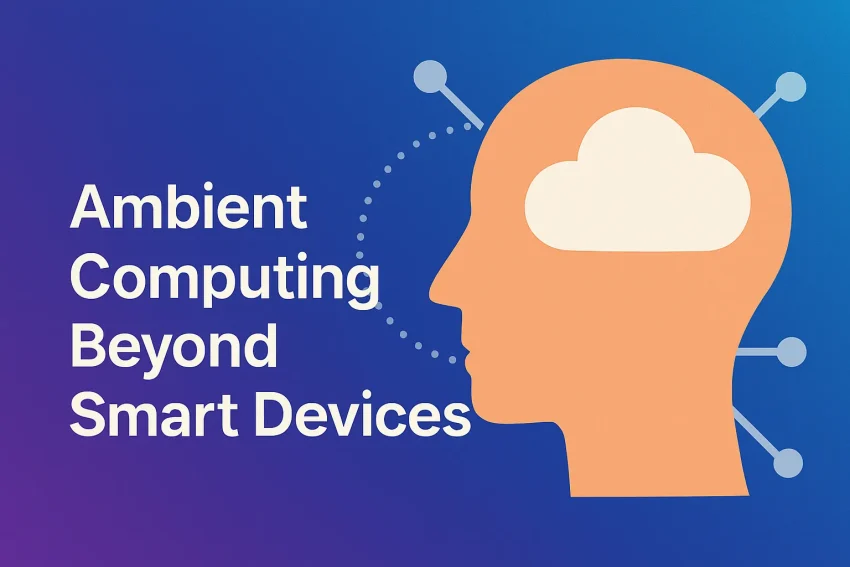
Ambient Computing Beyond Smart Devices
As technology continues to evolve at an unprecedented pace, a new paradigm is quietly shaping the way we live, work, and interact: Ambient Computing. Often described as the seamless integration of digital services into everyday environments, ambient computing goes far beyond traditional smart devices. It represents a shift from user-initiated interaction to context-aware, intelligent systems that anticipate needs and operate in the background. This transformation is not just technical—it’s experiential.
What is Ambient Computing?
Ambient computing refers to a technology ecosystem where devices, sensors, AI, and software work together invisibly and proactively in the background of our lives. Unlike smartphones or tablets that require active engagement, ambient systems function passively, responding to human presence, behavior, and context.
These systems rely on:
- Sensors (motion, light, temperature, biometric, etc.)
- Artificial Intelligence and Machine Learning
- Edge Computing
- Internet of Things (IoT)
- Natural Language Processing and Voice Recognition
The goal is to create an environment where computing “fades into the background,” enhancing human experience rather than interrupting it.
The Evolution From Smart Devices
Smart devices such as thermostats, TVs, and watches were the first step toward contextual technology. However, they still require some level of interaction. Ambient computing minimizes or even eliminates this need, creating fully adaptive environments.
For example, while a smart light may respond to a mobile app or voice command, an ambient system will adjust lighting based on time of day, room occupancy, and even your mood—without you asking.
Key Features of Ambient Computing
1. Context Awareness
Ambient systems sense their surroundings and adapt behavior based on environmental and personal context (e.g., room temperature, user location, activity).
2. Pervasiveness
Devices and systems are embedded in everyday environments—homes, offices, cars—blending seamlessly with physical spaces.
3. Proactive Behavior
Rather than waiting for commands, ambient systems anticipate needs. For instance, a car may warm up before you enter during winter.
4. Low Friction Interfaces
These include voice, gesture, and facial recognition—interfaces that minimize conscious effort from users.
5. Privacy-First Architecture
Modern ambient computing emphasizes local data processing (edge computing) to enhance speed and protect user privacy.
Real-World Applications Beyond Smart Devices
1. Ambient Homes
Homes equipped with embedded sensors can:
- Adjust lighting and HVAC based on time, weather, and presence
- Monitor health markers like heart rate or sleep patterns
- Detect falls or emergencies in elderly care settings
2. Workplace Automation
Ambient systems in offices improve productivity by:
- Auto-adjusting lighting and temperature for comfort
- Notifying teams of meeting room availability
- Delivering personalized content or reminders
3. Healthcare Monitoring
In healthcare, ambient computing enables continuous, passive monitoring:
- Track patient vitals with no wearables
- Alert caregivers of anomalies in behavior
- Assist in mental health with mood-detection lighting and sound
4. Retail and Customer Experience
Retailers are using ambient technologies to:
- Offer real-time personalized promotions
- Automate checkout with facial recognition
- Manage stock via sensor-based shelf tracking
5. Smart Cities
Urban environments benefit from:
- Traffic flow regulation using environmental sensors
- Waste management optimization
- Public safety via crowd monitoring and adaptive lighting
The Role of AI and Machine Learning
Ambient computing depends heavily on AI to interpret context and machine learning to adapt over time. These systems must:
- Process vast datasets quickly
- Understand natural human language and behaviors
- Make probabilistic predictions to take proactive action
As models become more sophisticated, ambient environments will become more “intuitive,” learning from subtle cues like tone of voice, gait, or even body temperature.
Challenges to Ambient Computing
Despite its potential, several challenges must be addressed:
- Privacy and Surveillance: Continuous data collection raises ethical and legal concerns.
- Data Ownership: Users must know how their data is used and have control over it.
- Interoperability: Diverse hardware and platforms must work together.
- Cost and Accessibility: Implementation must be scalable and affordable.
Future Outlook
The next phase of ambient computing may include:
- Emotion-aware environments that adjust lighting or sound based on your feelings
- Brain-computer interfaces (BCIs) enabling thought-controlled environments
- Zero UI concepts where the interface is completely invisible
As ambient computing evolves, we will witness a shift from device-centric experiences to ecosystem-centric intelligence.
Ambient computing represents a quiet revolution. By embedding intelligence into everyday environments, it enhances user experience while minimizing cognitive load. Beyond smart devices, it offers a vision of the future where technology becomes truly human-centric—reactive, respectful, and reliably invisible.
To thrive in the ambient era, businesses and developers must focus not just on technology—but on experience design, ethics, and interoperability.
The future isn’t about more devices. It’s about less friction and more intuition.
#AmbientComputing #EdgeAI #SmartEnvironments #IoTInnovation #FutureTech