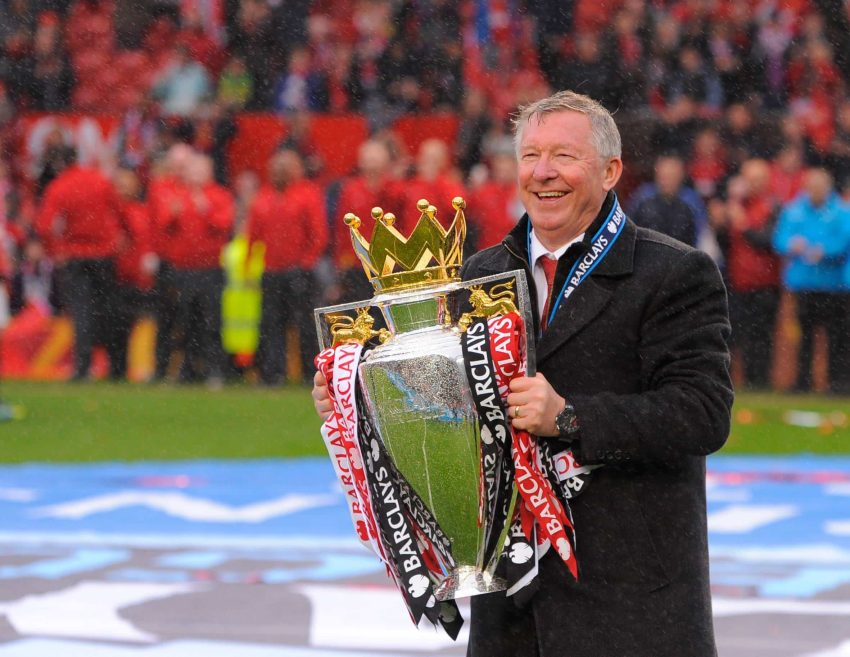
Sir Alex Ferguson, born on December 31, 1941, in Glasgow, Scotland, stands as one of the most iconic figures in football management history. Renowned for his transformative leadership at Manchester United from 1986 to 2013, he reshaped the club’s trajectory and solidified its status in Manchester United history. With over 30 major trophies to his name, including an astonishing 13 Premier League championships, Ferguson’s impact on the sport is undeniable. Before his monumental journey with Manchester United, he achieved remarkable success with Aberdeen FC, where his tactical brilliance garnered multiple Scottish Premier Division titles and a European Cup Winners’ Cup. His illustrious football management career showcases not just individual achievement but a lasting legacy that continues to influence the beautiful game today.
The legendary Scottish football manager Sir Alex Ferguson is synonymous with excellence in the realm of football. His tenure at Manchester United is a pivotal chapter in the club’s rich history, characterized by unmatched success and inspiring leadership. Known for his decisive strategies and keen eye for talent, Ferguson guided his teams to numerous Premier League achievements, making him a landscape-defining figure in English football. Prior to shaping Manchester United, he orchestrated the remarkable ascent of Aberdeen FC, demonstrating his exceptional managerial skills at a pivotal time in Scottish football. As his career unfolded, Ferguson not only evolved as a manager but also transformed the very fabric of football culture around him.
The Legendary Career of Sir Alex Ferguson
Sir Alex Ferguson, born in Glasgow, Scotland, in 1941, transformed professional football with his unparalleled leadership at Manchester United from 1986 to 2013. His approach to football management is widely praised, especially his ability to build and rebuild teams, ensuring sustained success over several decades. Ferguson’s tenure at Manchester United is undeniably one of the most celebrated periods in the club’s history, where he secured more than 30 major trophies, including an astounding 13 Premier League titles.
Ferguson’s career began in humble settings, starting as an amateur player at Queen’s Park before making his mark at Dunfermline Athletic. However, it was his managerial exploits that led him to prominence. After leading Aberdeenshire club Aberdeen FC to significant domestic and European success, such as winning the European Cup Winners’ Cup, Ferguson’s reputation grew, ultimately leading to his appointment at Manchester United. His philosophy that emphasized discipline, hard work, and a never-give-up attitude resonated and shaped the culture of Manchester United.
Manchester United’s Dominance Under Ferguson
During Sir Alex Ferguson’s illustrious managerial career, he guided Manchester United through an era of dominance in English football. The club achieved remarkable feats, including eight Premier League championships from 1992 to 2003, solidifying their position as the top team in England. Ferguson’s tactics were innovative, and his approach to player development created a squad rich in talent that captured the hearts of fans globally.
One of the highlights of Ferguson’s era was the unprecedented ‘treble’ in the 1998–1999 season, during which Manchester United not only secured the Premier League title but also lifted the FA Cup and the Champions League trophy. This achievement was a testament to Ferguson’s managerial genius and his unwavering belief in his team’s capability to succeed under pressure. His legacy continues to impact the game today, inspiring current managers and players alike.
Early Career and Aberdeen FC Success
Before his monumental success with Manchester United, Sir Alex Ferguson carved a path as a transformative manager at Aberdeen FC. Taking over in 1978, Ferguson instilled a winning mentality that led Aberdeen to three Scottish Premier Division titles and a series of domestic cup victories. These accomplishments were groundbreaking, particularly as he broke the Old Firm’s dominance, which had governed Scottish football for decades.
Under Ferguson’s guidance, Aberdeen’s most notable achievement came in 1983 with their remarkable victory in the European Cup Winners’ Cup. This victory not only elevated the club’s stature in European football but also showcased Ferguson’s ability to compete at the highest levels of the sport. His tenure at Aberdeen set the foundation for his future as a managerial heavyweight, demonstrating his tactical acumen and commitment to nurturing young talent.
Ferguson’s Revolutionary Management Philosophy
The management philosophy of Sir Alex Ferguson is often analyzed and emulated by football coaches worldwide. He believed in cultivating a robust team ethos while recognizing the importance of individual player development. Ferguson’s commitment to fostering young talent was epitomized by his promotion of the ‘Class of ’92,’ which featured future stars like Ryan Giggs, Gary Neville, and Paul Scholes, demonstrating his capability to identify and nurture emerging football talent.
Moreover, Ferguson’s understanding of the psychological aspects of football management allowed him to motivate players personally, creating a culture of both respect and resilience. His ability to adapt strategies based on opponents, as well as to innovate tactics during games, set him apart as a dominant figure in football management. This unique blend of authority, strategy, and charisma solidified his legendary status, making him one of the most successful managers in football history.
The Impact of Sir Alex Ferguson on Premier League History
Sir Alex Ferguson’s impact on Premier League history is profound and far-reaching. His tenure at Manchester United coincided with the establishment of the Premier League in 1992, and he played a pivotal role in shaping the modern era of English football. By guiding Manchester United to consistent top finishes, Ferguson’s teams became the benchmark for success in the league, raising the standard of competition across the board.
Under Ferguson’s leadership, Manchester United became synonymous with success, winning multiple league titles and redefining how football clubs approached management, player recruitment, and training. His strategies not only focused on immediate outcomes but also on long-term growth and sustainability, influencing the operational models of clubs throughout the Premier League and beyond. Ferguson’s legacy in the Premier League remains a critical chapter in the book of football.
Sir Alex Ferguson’s Departure and Lasting Legacy
When Sir Alex Ferguson announced his retirement in 2013, he left behind a legacy that few can rival. His final season with Manchester United was a fitting conclusion to a remarkable career, culminating in yet another Premier League title. The transition of leadership post-Ferguson positioned the club at a crossroads, with challenges that showcased the magnitude of his contributions during his 27-year reign. The atmosphere within the club and among supporters felt Ferguson’s absence acutely.
Ferguson’s philosophy and approach to management still resonate within Manchester United. His strategies and methods are studied extensively by current and aspiring managers. The principles of hard work, adaptability, and resilience that he instilled continue to empower the players and staff within the organization, proving that his influence transcends his physical presence. Sir Alex Ferguson remains a shining example of excellence in football management, firmly etched in the history of the Premier League.
The Role of Team Dynamics in Ferguson’s Success
One of the key elements of Sir Alex Ferguson’s success at Manchester United was his understanding of team dynamics and how to create a cohesive unit. Ferguson focused on building strong relationships among players, ensuring that they not only respected each other on the pitch but also developed friendships off it. This sense of camaraderie was vital in high-pressure situations, allowing players to support and trust one another during critical moments of matches, particularly in high-stakes finals.
Furthermore, Ferguson’s ability to manage personalities became crucial in fostering an environment of competitiveness. He was adept at resolving conflicts and ensuring harmony, allowing individual talents to shine while maintaining a collective focus on team objectives. By placing emphasis on teamwork while also celebrating individual contributions, Ferguson created a balanced approach that was instrumental in Manchester United’s unprecedented achievements during his time.
Reviving Manchester United’s Glory After Difficult Seasons
Ferguson’s journey with Manchester United was not devoid of challenges; in fact, it was during the difficult seasons, particularly the late 1980s, that his management style was put to the test. Facing skepticism and pressure from the club’s board and fans, Ferguson’s unwavering belief in his vision allowed him to navigate these tumultuous times. His resilience in the face of adversity was key to reviving Manchester United’s fortunes when many thought he would not last.
The turning point came with the FA Cup victory in 1990, which offered a dramatic turnaround. This victory not only reaffirmed his abilities as a manager but also ignited a new ambition within the team. Ferguson skillfully transformed the squad, integrating talented players who would go on to embody the winning mentality he championed, ultimately leading Manchester United into a golden era of triumphs that reshaped the club’s history.
Ferguson’s Educational Influence in Football Management
Beyond his direct impact on Manchester United, Sir Alex Ferguson’s influence extends to the education of future football managers. His approaches to training methods, leadership styles, and player motivation have become fundamental components of football management courses worldwide. Universities and coaching clinics often study Ferguson’s philosophies, emphasizing the importance of adaptability and psychological acumen in coaching.
Ferguson’s autobiographies and interviews reveal insights into his strategies and decision-making processes, inspiring new generations of coaches to adopt his methods. He has contributed significantly to discussions on best practices in football management, offering guidance on how to build effective teams and create a positive culture within clubs. His legacy as a mentor to aspiring managers showcases the depth of his knowledge and experience, ensuring that his influence on the game endures.
Conclusion: Sir Alex Ferguson’s Enduring Legacy in Football
Sir Alex Ferguson’s legacy in football is one of unprecedented success, driven by artistry in management and an unwavering passion for the game. His strategic vision not only transformed Manchester United but also left an indelible mark on the entire world of football. Ferguson’s tenure has become a model for what can be achieved through dedication, hard work, and an insightful understanding of the sport.
As football continues to evolve, the principles and practices established by Ferguson remain relevant. His impact extends beyond titles; it is about the journey of fostering talent, building character, and instilling a winning mentality. The essence of his legacy is encapsulated in the lessons learned from his storied career, inspiring future generations to push the boundaries of excellence in football.
Frequently Asked Questions
What are Sir Alex Ferguson’s major achievements in Manchester United history?
Sir Alex Ferguson’s tenure at Manchester United from 1986 to 2013 is marked by an unprecedented record of over 30 trophies, including 13 Premier League championships, five FA Cup victories, and two UEFA Champions League titles. Under his management, Manchester United solidified its position as one of the most successful clubs in football history.
How did Sir Alex Ferguson achieve success at Aberdeen FC before moving to Manchester United?
Before joining Manchester United, Sir Alex Ferguson led Aberdeen FC to remarkable success, winning three Scottish Premier Division titles, four Scottish Cups, and the prestigious European Cup Winners’ Cup in 1983. His achievements at Aberdeen established his reputation and ultimately paved the way for his appointment at Manchester United.
How did Sir Alex Ferguson impact Scottish football during his career?
Sir Alex Ferguson significantly impacted Scottish football, particularly through his leadership at Aberdeen FC, where he broke the dominance of Celtic and Rangers in the Scottish Premier Division. His success as a Scottish football manager set a precedent for future coaches and highlighted the potential for achieving great things in Scottish football.
What was the turning point for Sir Alex Ferguson’s football management career at Manchester United?
The turning point in Sir Alex Ferguson’s management career at Manchester United came during the 1989-90 season when he secured an FA Cup victory. This win relieved pressure on Ferguson and marked the beginning of an era of remarkable success, leading to multiple Premier League titles and two Champions League victories.
In what ways did Sir Alex Ferguson revolutionize football management during his time?
Sir Alex Ferguson revolutionized football management through his innovative approaches to training, player management, and strategic game planning. His emphasis on youth development and the successful integration of young players into the first team laid the foundation for sustained success at Manchester United, influencing modern football management practices.
What legacy did Sir Alex Ferguson leave in the world of football?
Sir Alex Ferguson’s legacy in football is immense, characterized by his record as the longest-serving Manchester United manager, his numerous domestic and international titles, and his influence on future generations of managers and players. His approach to leadership and commitment to excellence set high standards in the sport.
| Key Points |
|---|
| Sir Alex Ferguson: Birth and Early Life – Born December 31, 1941, in Glasgow, Scotland. |
| Playing Career – Started at Queen’s Park, professional career at Dunfermline Athletic, and later played for Rangers. |
| Managerial Career Start – Managed East Stirlingshire in 1974, then St. Mirren, leading to success at Aberdeen. |
| Achievements at Aberdeen – Three Scottish Premier Division titles, four Scottish Cups, and the European Cup Winners’ Cup in 1983. |
| Tenure at Manchester United – 1986-2013, leading to over 30 domestic and international titles. |
| Historical Success – Achieved the first ‘treble’ in English football history in 1999. |
| Retirement – Retired in 2013 but remained as a club ambassador. |
Summary
Sir Alex Ferguson is widely regarded as one of the greatest football managers of all time. His unparalleled success during his tenure at Manchester United not only redefined the club’s legacy but also set a benchmark in English football. With a remarkable track record of winning over 30 trophies, including 13 Premier League titles and 2 Champions League trophies, Ferguson’s influence on the game continues to be felt long after his retirement. His strategic acumen and ability to foster talent transformed Manchester United into a global powerhouse. Today, Sir Alex Ferguson remains a revered figure in the world of sports, not just for his victories but for his enduring impact on the beautiful game.