Introduction
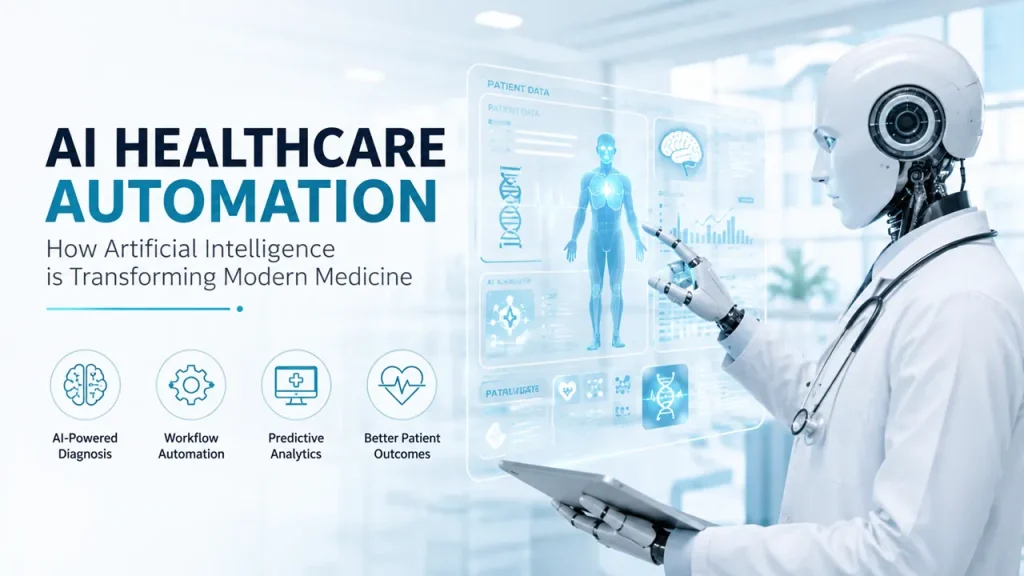
Healthcare is entering a new era powered by artificial intelligence (AI). From diagnosing diseases faster to automating hospital operations, AI healthcare automation is reshaping modern medicine in ways that were unimaginable just a decade ago.
Hospitals, clinics, pharmaceutical companies, and telemedicine platforms are rapidly adopting AI-driven systems to improve patient outcomes, reduce operational costs, and increase medical efficiency. As the global healthcare industry faces physician shortages, rising patient demands, and increasing data complexity, AI automation has become more than a luxury — it is now a necessity.
This guide explores how AI healthcare automation works, its biggest applications, benefits, challenges, and what the future holds for intelligent medical systems.
📌 What Is AI Healthcare Automation?
AI healthcare automation refers to the use of:
- Machine Learning (ML)
- Natural Language Processing (NLP)
- Predictive Analytics
- Computer Vision
- Robotic Process Automation (RPA)
to automate clinical, administrative, and operational healthcare tasks.
Instead of relying entirely on manual processes, AI systems analyze massive datasets, identify patterns, make predictions, and assist healthcare professionals in decision-making.
🏥 Major Applications of AI in Healthcare
1️⃣ AI-Powered Medical Diagnosis
AI algorithms can detect diseases with incredible accuracy by analyzing:
- X-rays
- MRI scans
- CT scans
- Blood tests
- Patient histories
Example:
AI models now identify breast cancer and lung diseases faster than some traditional diagnostic methods.
Benefits:
✅ Faster diagnosis
✅ Earlier disease detection
✅ Reduced human error
✅ Better patient survival rates
2️⃣ Robotic Surgery Automation
Modern robotic surgical systems use AI-assisted precision to support surgeons during complex procedures.
Advantages:
- Smaller incisions
- Reduced blood loss
- Faster recovery
- Higher surgical precision
AI robotics can also learn from previous surgeries to improve future performance.
3️⃣ AI Virtual Assistants & Chatbots
Healthcare chatbots automate patient communication:
- Appointment scheduling
- Symptom checking
- Medication reminders
- Follow-up care
- Insurance inquiries
These AI systems reduce hospital workload while improving patient experience.
Popular Use Cases:
- Telemedicine platforms
- Hospital support centers
- Mental health applications
4️⃣ Predictive Analytics for Disease Prevention
AI systems analyze patient data to predict:
- Heart disease risks
- Diabetes progression
- Stroke probability
- Hospital readmissions
This enables preventive healthcare instead of reactive treatment.
Example:
Hospitals can identify high-risk patients before conditions become critical.
5️⃣ AI in Drug Discovery
Traditional drug development can take over 10 years.
AI dramatically speeds up this process by:
- Simulating molecular interactions
- Identifying promising compounds
- Predicting side effects
- Optimizing clinical trials
Pharmaceutical companies now use AI to accelerate research and reduce development costs.

⚙️ Administrative Healthcare Automation
AI is not limited to clinical care.
Hospitals also automate:
| 🏥 Process | 🤖 AI Function |
|---|---|
| Billing | Automated claim processing |
| Scheduling | Smart appointment optimization |
| Medical Records | NLP-based documentation |
| Insurance Verification | Instant policy checks |
| Workflow Management | Staff optimization |
Administrative automation reduces burnout among healthcare workers and improves operational efficiency.
📊 Benefits of AI Healthcare Automation
✅ Increased Efficiency
AI eliminates repetitive tasks, allowing doctors and nurses to focus more on patient care.
✅ Reduced Costs
Automation lowers operational expenses by reducing:
- Manual labor
- Paperwork
- Diagnostic delays
- Human errors
✅ Improved Patient Outcomes
AI systems support:
- Faster treatments
- Personalized medicine
- Early interventions
- Real-time monitoring
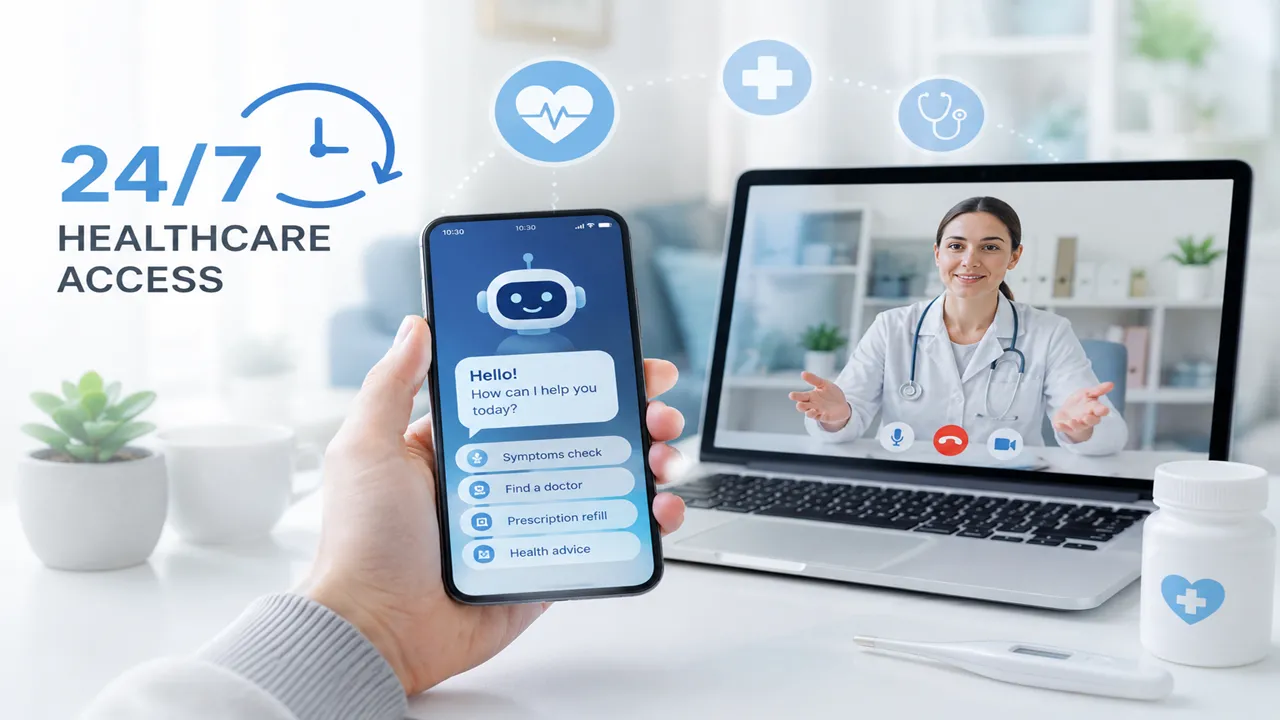
✅ 24/7 Healthcare Access
AI chatbots and telemedicine platforms provide continuous support even outside hospital hours.
🔒 Challenges & Ethical Concerns
Despite its advantages, AI healthcare automation also raises concerns.
⚠️ Data Privacy
Medical data is highly sensitive.
Healthcare organizations must comply with regulations like:
- HIPAA
- GDPR
- Patient consent laws
⚠️ AI Bias
AI systems can produce biased outcomes if trained on incomplete or unbalanced datasets.
This may affect diagnosis accuracy across different demographics.
⚠️ Human Oversight
AI should assist healthcare professionals — not completely replace them.
Medical decisions still require human judgment and ethical responsibility.
🌍 The Future of AI in Healthcare
The future of healthcare automation looks revolutionary.
Emerging trends include:
| 🚀 Technology | 🔮 Future Impact |
|---|---|
| AI Wearables | Real-time health monitoring |
| Digital Twins | Personalized patient simulations |
| Generative AI | Automated medical documentation |
| AI Genomics | Precision medicine |
| Smart Hospitals | Fully automated operations |
Experts predict AI will become deeply integrated into every layer of healthcare infrastructure.
📈 Why Businesses Are Investing in Healthcare AI
The global AI healthcare market is expected to grow rapidly due to:
- Aging populations
- Rising healthcare costs
- Shortage of medical professionals
- Demand for personalized medicine
- Expansion of telehealth
Healthcare providers adopting AI early gain competitive advantages through better patient care and operational scalability.
🧬 AI + Human Collaboration: The Winning Formula
The most effective healthcare systems combine:
👨⚕️ Human expertise
➕
🤖 AI automation
Rather than replacing doctors, AI enhances their capabilities by providing:
- Faster insights
- Data-driven recommendations
- Workflow optimization
- Predictive intelligence
This collaboration creates smarter, safer, and more efficient healthcare environments.
🎯 Final Thoughts
AI healthcare automation is no longer a futuristic concept — it is already transforming modern medicine today.
From disease diagnosis and robotic surgery to predictive analytics and administrative automation, artificial intelligence is revolutionizing how healthcare systems operate worldwide.
Organizations that embrace AI-driven healthcare technologies now will be better positioned to deliver faster, smarter, and more personalized medical care in the future.
The healthcare industry is entering the age of intelligent medicine — and AI is leading the transformation.