Introduction: Understanding the Types of Artificial Intelligence
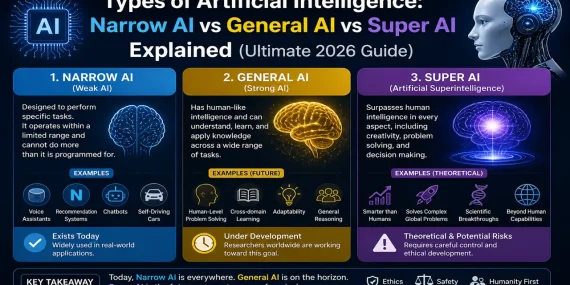
Artificial Intelligence (AI) is transforming every industry—from healthcare and finance to entertainment and education. But not all AI is created equal. To truly understand AI, you need to explore its three core types:
- Narrow AI (Weak AI)
- General AI (Strong AI)
- Super AI (Artificial Superintelligence)
In this comprehensive guide, you’ll learn how these AI types work, how they differ, real-world examples, future implications, and why understanding them is essential for building topical authority in the AI niche.
What Is Artificial Intelligence?
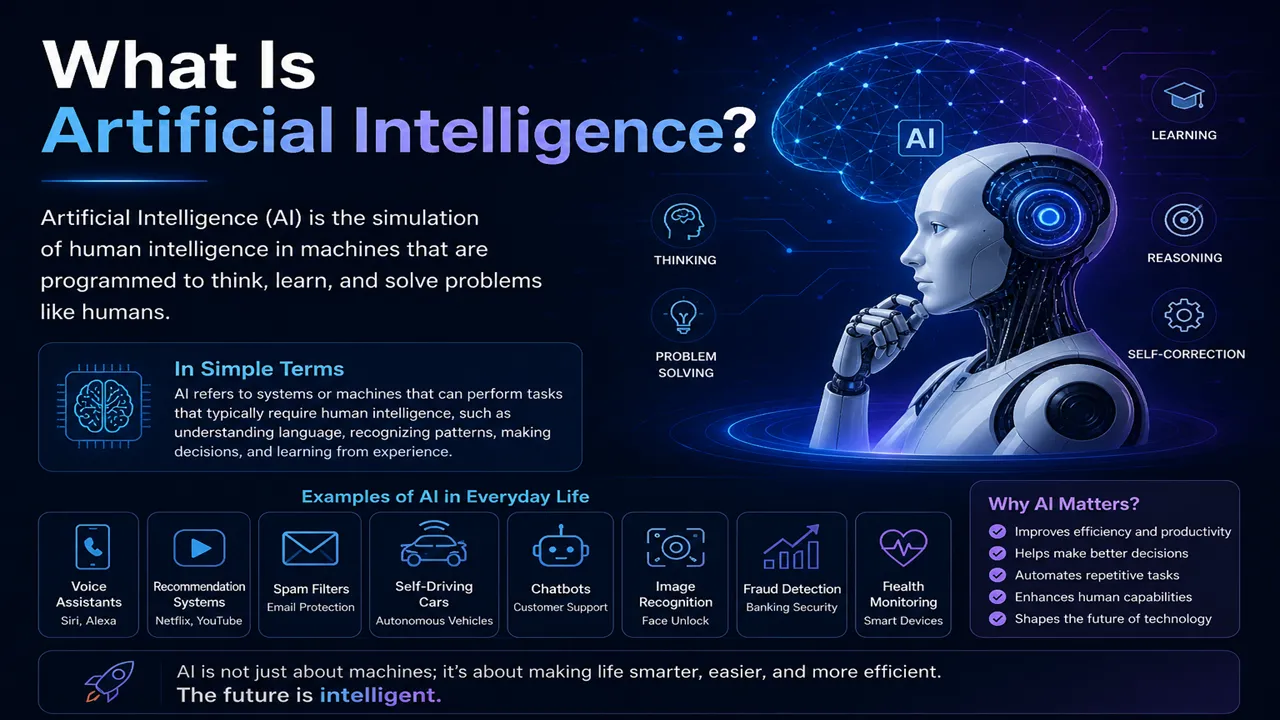
Artificial Intelligence refers to machines designed to simulate human intelligence. These systems can:
- Learn from data
- Solve problems
- Understand language
- Recognize patterns
- Make decisions
AI systems are built using technologies like:
- Machine Learning (ML)
- Deep Learning
- Neural Networks
- Natural Language Processing (NLP)
1. Narrow AI (Weak AI)
What Is Narrow AI?
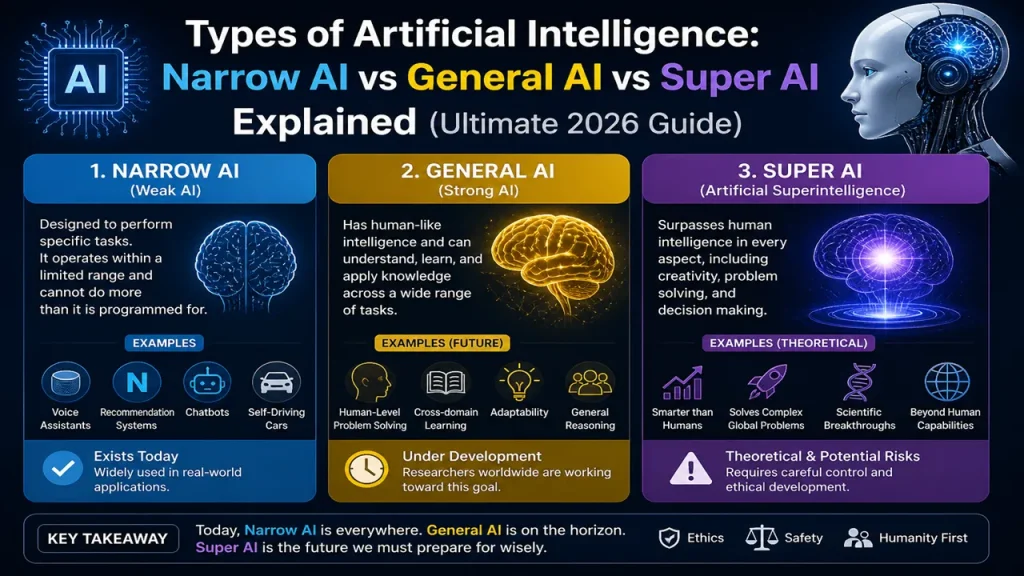
Narrow AI, also known as Weak AI, is designed to perform a specific task or a limited set of tasks. It is the only type of AI that currently exists in the real world (2026).
👉 It does not possess general intelligence or consciousness—it simply follows patterns and data.
How Narrow AI Works
Narrow AI operates using:
- Pre-trained models
- Large datasets
- Task-specific algorithms
It excels in pattern recognition and automation but cannot think beyond its programmed scope.
Examples of Narrow AI
- Voice assistants (Siri, Alexa)
- Recommendation systems (Netflix, Amazon)
- Chatbots (customer support AI)
- Image recognition software
- Self-driving car systems (limited autonomy)
Key Characteristics of Narrow AI
- 🎯 Task-specific
- ⚡ Highly efficient
- ❌ No self-awareness
- ❌ No general reasoning ability
Real-World Applications
🛒 E-commerce
- Product recommendations
- Dynamic pricing
📱 Mobile Apps
- Face recognition
- Voice commands
🏥 Healthcare
- Disease detection (AI radiology tools)
Pros and Cons of Narrow AI
✅ Advantages
- Fast and efficient
- Scalable
- Widely available
❌ Disadvantages
- Limited intelligence
- Cannot adapt outside scope
- Requires large data
2. General AI (Strong AI)
What Is General AI?
General AI, also known as Strong AI or Artificial General Intelligence (AGI), refers to AI that can perform any intellectual task a human can do.
👉 Unlike Narrow AI, General AI can learn, reason, and adapt across multiple domains.
Current Status of General AI
As of 2026:
❗ General AI does NOT fully exist yet
However, research is rapidly progressing, especially in:
- Large Language Models (LLMs)
- Multimodal AI systems
- Autonomous agents
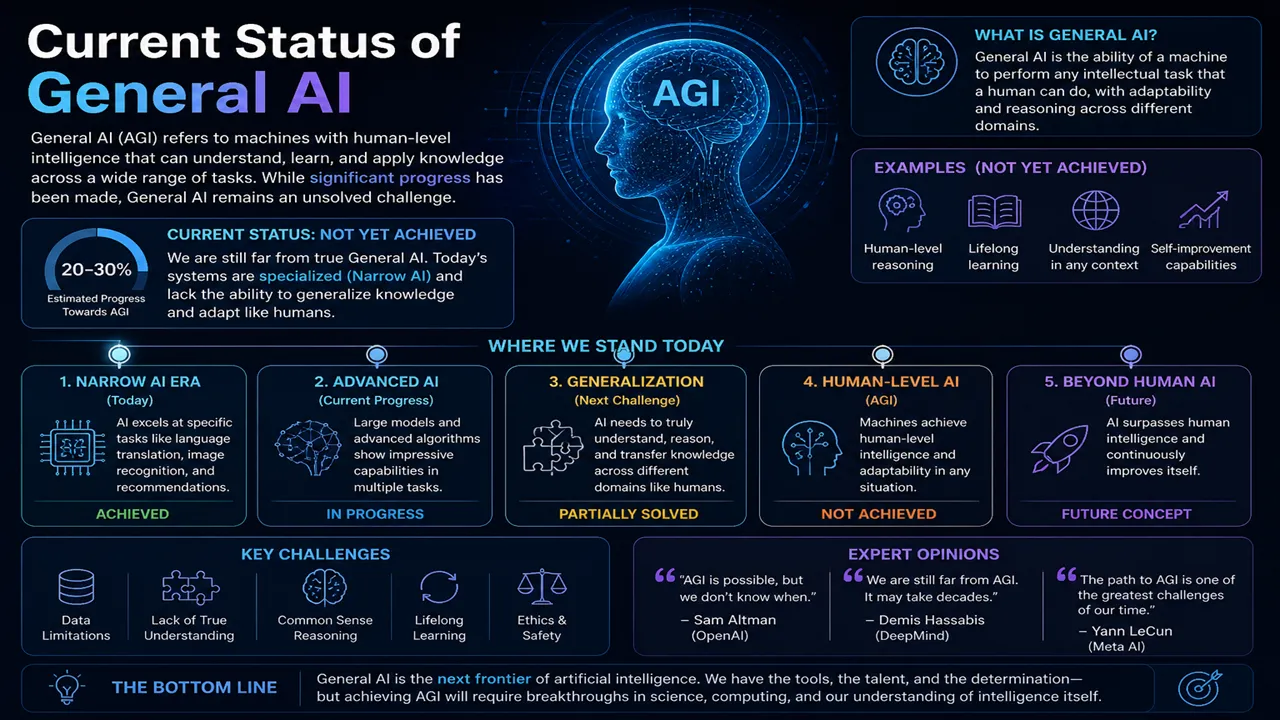
Key Capabilities of General AI
- Cross-domain learning
- Human-like reasoning
- Problem-solving without prior training
- Emotional understanding (theoretical)
Examples (Theoretical & Early Stage)
- Advanced AI assistants capable of full autonomy
- AI that can learn a new profession without retraining
- Systems that combine reasoning, creativity, and perception
How General AI Would Work
General AI would require:
- Advanced neural architectures
- Massive computational power
- Continuous learning systems
- Integration of multiple AI disciplines
Characteristics of General AI
- 🧠 Human-level intelligence
- 🔄 Adaptive learning
- 🌍 Multi-task capability
- ⚠️ High complexity
Pros and Cons of General AI
✅ Advantages
- Extreme versatility
- Can solve complex global problems
- Reduces need for human labor
❌ Risks
- Ethical concerns
- Loss of control
- Economic disruption
3. Super AI (Artificial Superintelligence)
What Is Super AI?
Super AI, also known as Artificial Superintelligence (ASI), is a hypothetical form of AI that surpasses human intelligence in every aspect.
👉 This includes:
- Creativity
- Problem-solving
- Emotional intelligence
- Scientific innovation
Is Super AI Real?
❌ No—Super AI does not exist yet.
However, it is one of the most discussed topics in AI research and philosophy.
Potential Capabilities of Super AI
- Solve unsolved scientific problems
- Cure diseases instantly
- Predict global events
- Redesign entire industries
Risks of Super AI
Super AI introduces serious concerns:
- Loss of human control
- Existential risk
- Ethical dilemmas
- Power concentration
Super AI vs Human Intelligence
| Feature | Human | Super AI |
|---|---|---|
| Learning Speed | Slow | Instant |
| Memory | Limited | Unlimited |
| Accuracy | Variable | Near-perfect |
| Emotions | Biological | Simulated or beyond |
Philosophical Questions
- Can machines become conscious?
- Should AI have rights?
- Who controls superintelligence?
Narrow AI vs General AI vs Super AI (Comparison Table)
| Feature | Narrow AI | General AI | Super AI |
|---|---|---|---|
| Intelligence Level | Task-specific | Human-level | Beyond human |
| Current Status | ✅ Exists | ❌ Not yet | ❌ Not yet |
| Learning Ability | Limited | Adaptive | Self-evolving |
| Examples | Chatbots, Siri | Advanced AGI systems | Hypothetical |
| Risk Level | Low | Medium | High |
Evolution of AI: From Narrow to Super Intelligence
AI evolution can be seen as a progression:
- Narrow AI → Present reality
- General AI → Near future goal
- Super AI → Long-term possibility
Transition Challenges
- Data limitations
- Computational constraints
- Ethical boundaries
- Alignment problem (AI goals vs human goals)
Real-World Impact of AI Types
🏢 Business
- Narrow AI → automation
- Future AGI → strategic decision-making
🏥 Healthcare
- Diagnosis (Narrow AI)
- Personalized treatment (AGI potential)
🎓 Education
- AI tutors (Narrow AI)
- Fully adaptive learning systems (AGI)
Future of Artificial Intelligence (2026–2040)
Experts predict:
- AGI may emerge within decades
- AI-human collaboration will dominate
- Regulation will increase
Ethical Considerations
AI development must address:
- Bias in algorithms
- Data privacy
- Accountability
- AI safety
Why Understanding AI Types Matters
If you’re building content or business in AI:
- Helps target keywords
- Builds topical authority
- Positions you as an expert
SEO Strategy for This Topic
To rank on Google:
🎯 Target Keywords:
- Types of AI
- Narrow AI vs General AI
- What is AGI
- Super AI explained
🔧 Optimization Tips:
- Use structured headings
- Add internal links
- Include FAQs
FAQ: Types of Artificial Intelligence
The three main types of artificial intelligence are Narrow AI, General AI, and Super AI. Narrow AI is designed for specific tasks, General AI aims to perform any intellectual task like humans, and Super AI represents a theoretical level where machines surpass human intelligence.
Today, only Narrow AI exists in real-world applications. It is widely used in tools like voice assistants, recommendation systems, and chatbots, but it is limited to specific tasks.
Yes, General AI is considered possible, but it is still under development. Researchers are working toward creating systems that can think and learn like humans, but this level of AI has not yet been achieved.
Super AI could be potentially dangerous if not properly controlled. Since it would surpass human intelligence, experts emphasize the importance of ethical guidelines and safety measures in its development.
Final Thoughts
Understanding the difference between Narrow AI, General AI, and Super AI is crucial in 2026.
- Narrow AI dominates today
- General AI is the next frontier
- Super AI represents the ultimate evolution
👉 Those who understand these concepts early will lead the future of technology, content, and innovation.